Write for the web

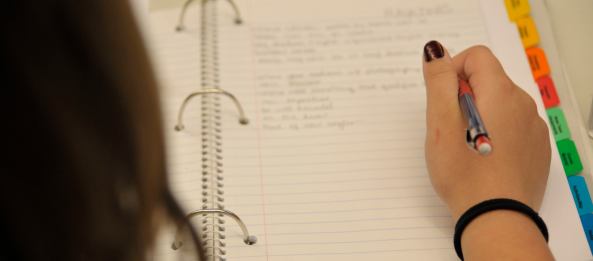
Becoming a master of style is just as important as collecting great content.  Print, broadcast and web all require great writing that is similar.  AP Style is still king.  Accuracy is a requirement and great grammar is imperative.

The least understood medium is the web.  We are still learning how people consume content and what type of content is most effective on which type of device whether it be a desktop computer, laptop, reader, iPad or smart phone.

Here are some helpful thoughts for developing your own skill as a web content creator.

Building Powerful Landing Pages

Writing_for_the_web

Using Sony Handicams and Importing to FCP

Instructions courtesy of Stephen Elliott.  Cronkite News Service Director

USING SONY HD HANDYCAMS AND GETTING VIDEO INTO FINALCUT

Take a Deep Breath

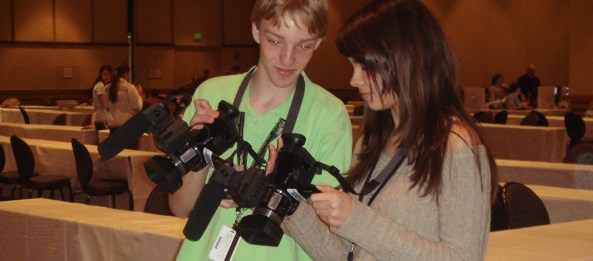
Seriously – I want you to take a deep breath. Close your eyes and find a place of zen. Envision yourself turning on the camera, pointing it at something or someone you want to document, hitting the record button and capturing crisp video. Believe it or not, most video cameras today are this easy to use. This doesn’t make it easier to choose the right scenes and subjects, frame properly, etc., but it makes things a lot easier before you do. The camera you will use in this class also has a hard drive, making exporting video much easier than a camera recording on tape.

Camera Basics

Here is a rough representation of the business end of the Handycam, focusing on the few features you need to understand to make it work.
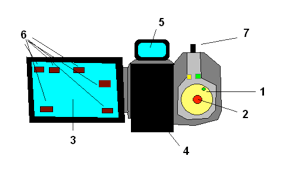
  1. This wheel turns the camcorder off and on.
  2. This button stops and starts recording.
  3. Here’s the viewscreen. Flip it out from the side of the camera.
  4. The battery goes here. It’s secured by a latch underneath.
  5. Direct view into lens. Just forget this exists. Use the viewscreen.
  6. These are various items on the viewscreen that it helps to know.
  7. Zoom lever. Continue reading

Who Are Those Old People in Our Lab?

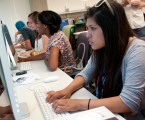
Age and technological prowess often are not synonymous, particularly in education.  Factor in the tech toys, marvels and training available at Orlando’s Full Sail University and you can imagine the dismay expressed by the student who asked, “Who are all those old people in our lab?”

It is just as easy to understand the laughter the querry evoked among the educators and professionals attending the  Apple Distinguished Educator conference. No longer were they masters of WIKIS, AVATARS, NINGS, MOODLES, MMOGS, TWEETS, BUMPS, VRE’s, and a dizzying array of professional software certifications. Continue reading

Social Media Guidelines for Student Journalists

The Cronkite School encourages participants in its professional programs to make use of social networking sites such as Facebook and Twitter, which are valuable reporting tools and promotional and distribution channels for our content. To ensure the highest journalistic standards in these programs, participants must abide by the following standards for social media use drawn from The Poynter Institute for Media Studies and the Society of Professional Journalists’ Code of Ethics. Continue reading

Multimedia…the new literacy

This slideshow requires JavaScript.

STEMM: Science, Technology, Engineering, Math….. and Multimedia?

Need a quick explanation of ohms, watts, sound pressure levels and dynamic range? Who would you call? What if you want an explanation of lighting heat signatures and their importance?

Could you plot the area of a sphere covered by an electronic signal beamed from a distant moving source? Do you need to determine the amount of lumber required to construct a 30-foot cyclorama and cove curved horizontally and vertically so that light refracts rather than reflects? Continue reading

Role of the Community College and Nature of it’s Students

Perhaps it is most appropriate to comment on the nature of the community college student before discussing the role of the community college. My comments are based purely on observation and not on any scientific research. I would also suggest some may not necessarily be valid when comparing residence and non-residence campuses. Continue reading

ACTE 2011

The 2011 ACTE national conference is winding down. It seems everyone is talking Web 2.0 and 21st Century skills. There appear to be a few disconnects in my opinion.
1. We want our students to collaborate via web tools but restrict access to the Web.
2. Web policy is often dictated by limited web users.
3. Teachers often are trying to apply hi-tech tools to 19th Century pedagogy.
4. Teachers find it difficult to embrace tools they neither use nor understand.

We have a long way to go but at least we are talking. To be fair there are many who are doing admirable things. The challenge is to move things out of episodic isolation, systemically to scale.

Global Achievement Gap-Call to Action

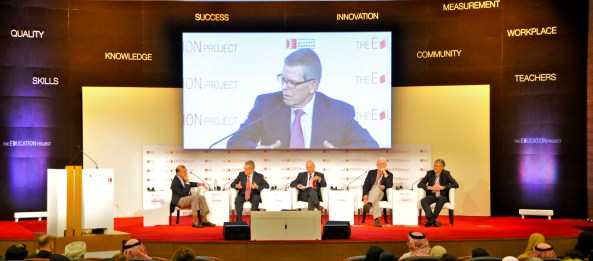
Minister of Education for the Kingdom of Bahrain, HE Dr. Majid bin Ali Al Nuaimi outlines what must change. Continue reading

Global Achievement Gap-Seismic Shift

The current educational buzz surrounds the success in Finland. Jaana Palojarvi, Director for International Relations of the Finnish Ministry of Education and Culture credits a “culture of trust in education professionals” as being a key component. Continue reading

Global Achievement Gap-Attitudes and Myths

In order to even begin the discussion a few “educational myths” need to be exposed. Continue reading